
GLaDOS OS screenshots
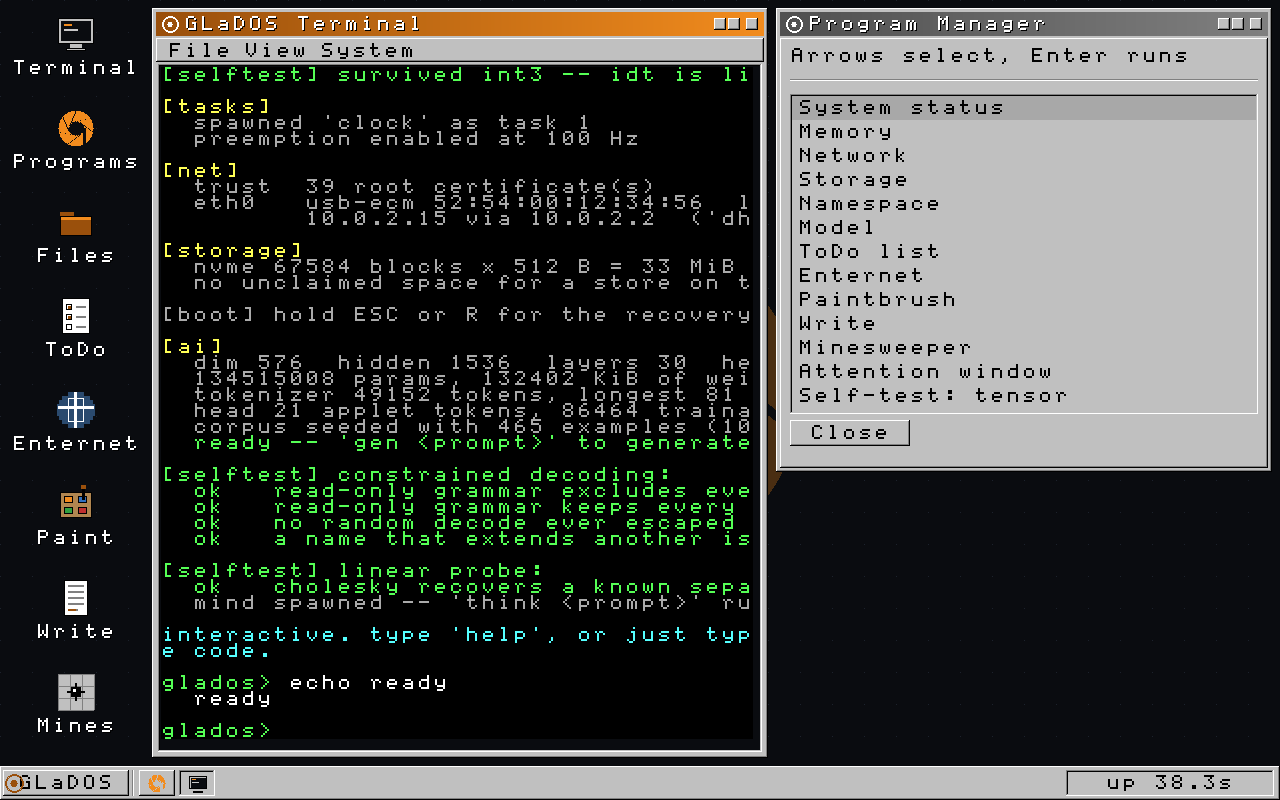
Taken from the running system under QEMU, through the emulator's monitor, so each one is the framebuffer's exact contents at 1280x800. All five are from 1.3.5.
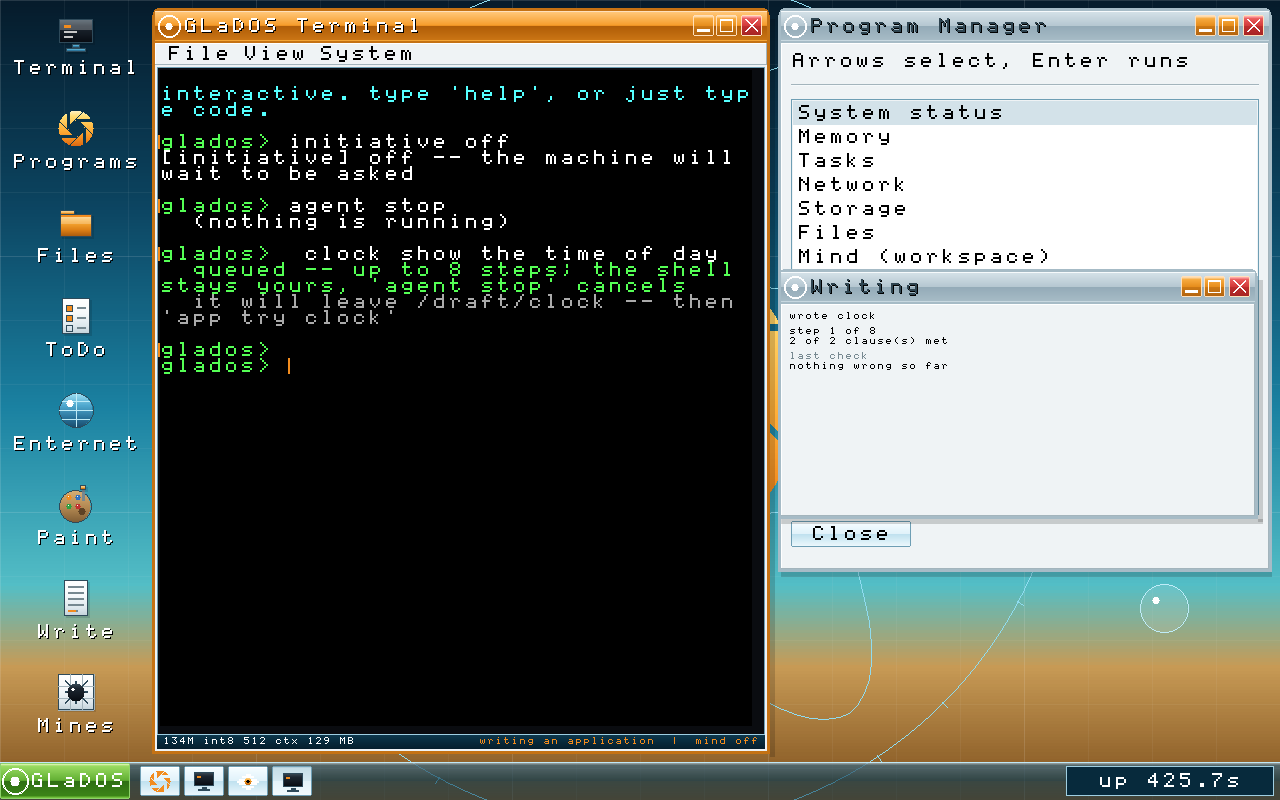
author clock show the time of day queues a run and hands the prompt straight back, which is the point of it: the shell stays yours while it works, and agent stop cancels. The Writing window is the run reporting on itself -- which step of its budget it is on, how many of the clauses it set itself have been met, and the last check verbatim. There is no progress bar, because a step can be a skeleton that lands instantly or a decode that takes seconds, and the loop ends when the checks pass rather than after a known amount of work. It leaves a draft and adopts nothing: app try runs it, app take keeps it. Nothing here calls out to anything. The model that decided to write this is in the same address space as the code drawing the window it is reporting into.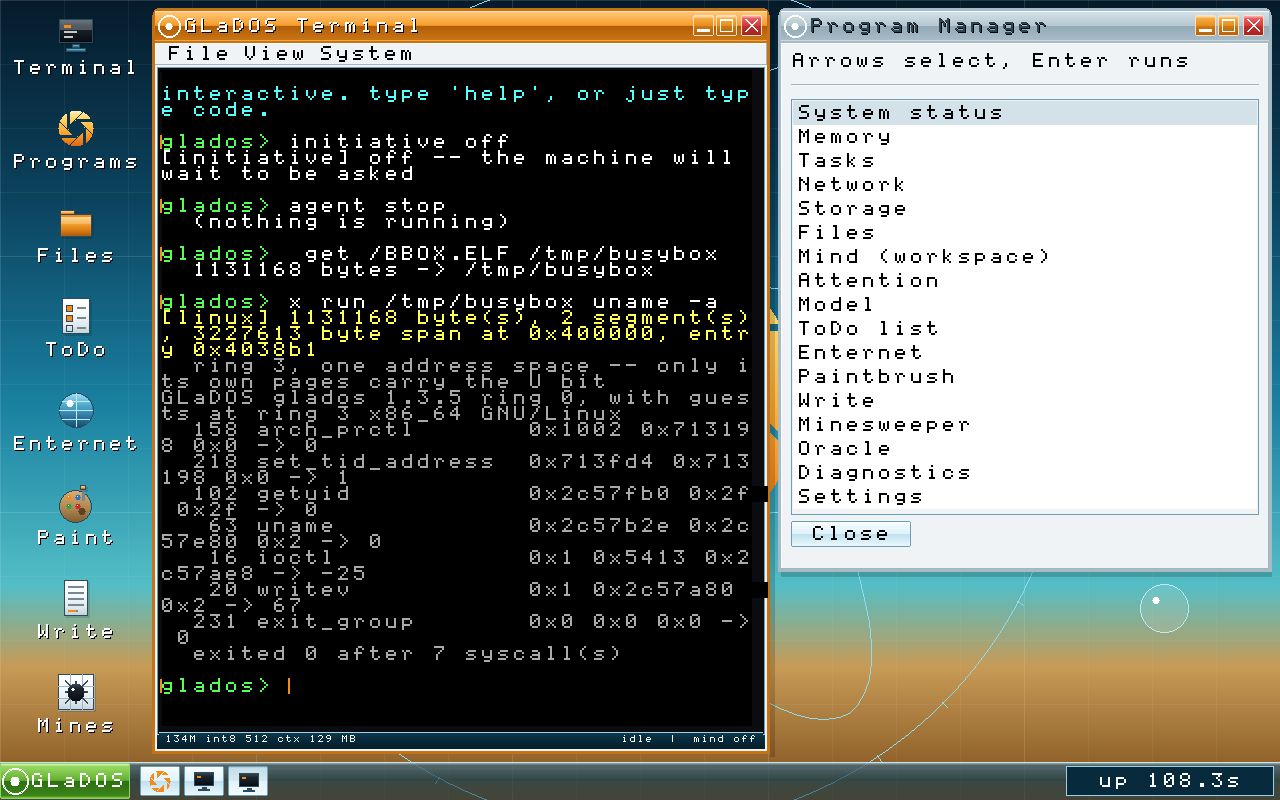
uname -a for itself. Underneath is every syscall it made, with the arguments it passed and what it got back: seven of them, ending in exit_group. The same binary run as sha256sum hashes its own file to the digest the development machine computes over the same bytes, which is the check that settles this path against an implementation nobody here wrote.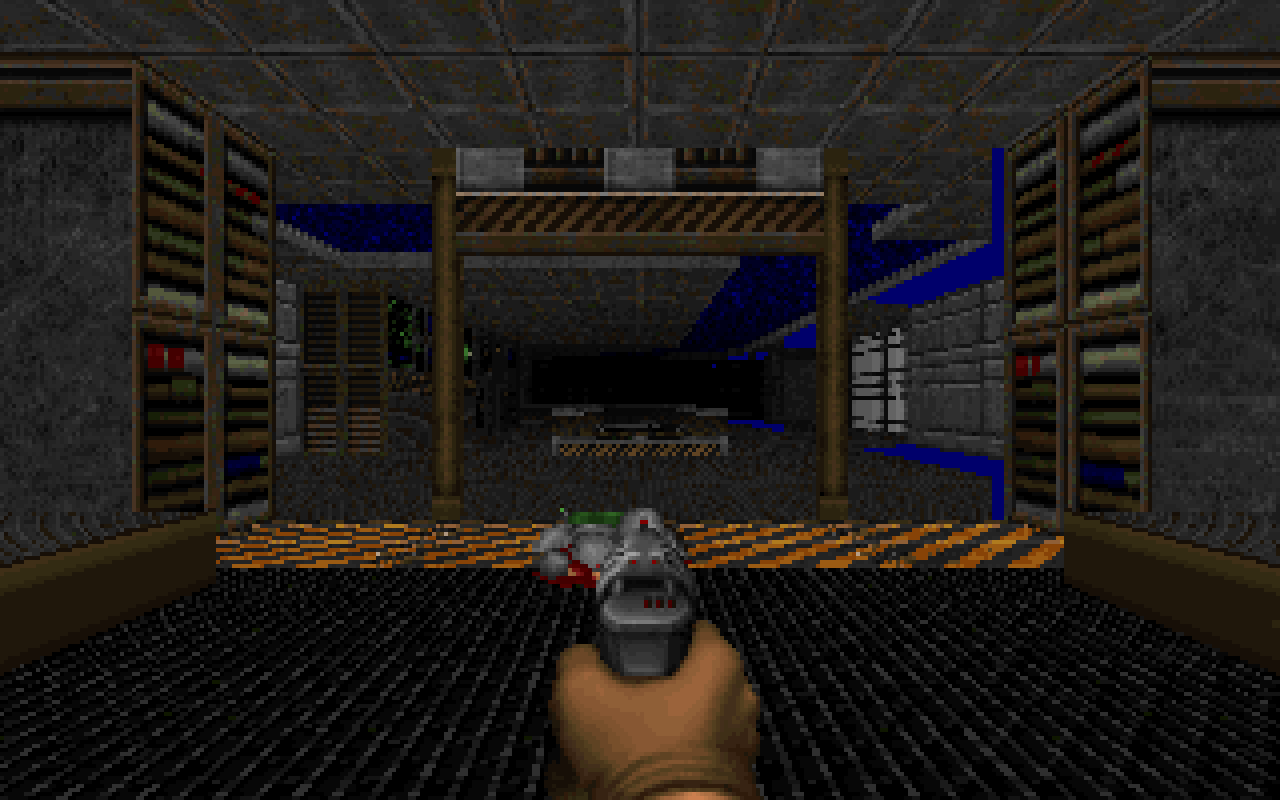

video driver: glados, a display of 1280x800 and a surface with a pitch of 5120 bytes. The diagonal is why the picture is shaped like this. Eight flat bars come out looking perfectly correct under a wrong stride, as long as the stride is a multiple of the bar width, and a line from corner to corner cannot. It runs straight.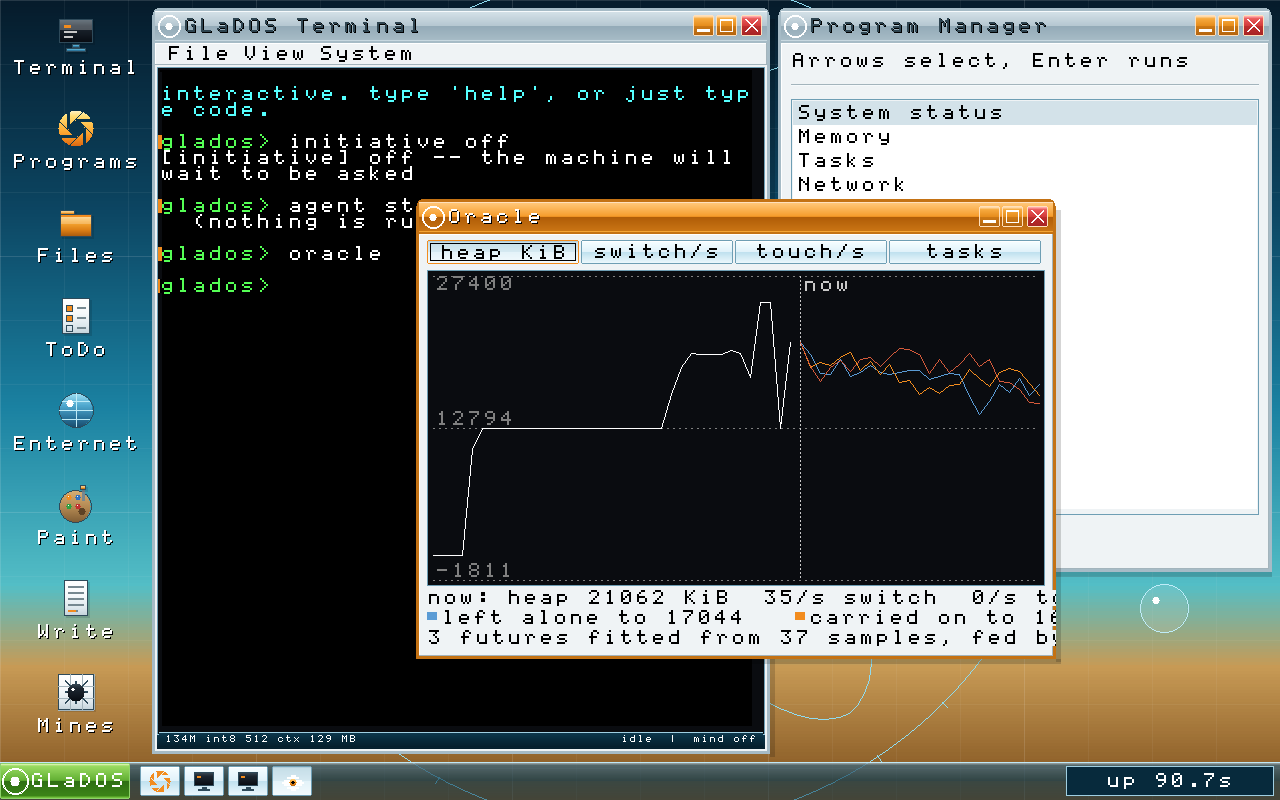
What you are looking at
There is no graphics library beneath any of this. UEFI's Graphics Output Protocol hands the kernel four numbers, and the glyph renderer, the gradients, the window manager, the wallpaper geometry and the compositor are all written above them. src/gfx/theme.rs owns the whole look, which is what made the move off Windows 98 chrome at 1.3.0 mostly a change of numbers rather than a change to every caller.
The frame is composed and then diffed. Every change repaints the entire screen back to front into a heap buffer, and only the row spans that differ from what is already on the display get written. Total repaint is what keeps the window manager obviously correct; the diff is why nothing flashes.
None of these were arranged by hand. The machine that builds GLaDOS is not the machine that runs it, so the desktop is driven over a serial line: a script sends shell commands, and the emulator's monitor is asked for the framebuffer. Anything the pointer can do a keystroke can also do, which is a constraint the testing imposed and the interface kept.